There are moments from our seven months in Asia that still sit in our chests.
The two-day slow boat from Chiang Khong into Laos is one of them.
At the time, it felt like adventure, like romance, like the slow travel story you dream about when you first start talking about leaving everything behind.
But travel has a way of revealing what you didn’t know you were taking for granted. Sometimes it does it gently. And sometimes it does it all in a single day.
The boat
You get three choices for how you go up the river. Two of them are the nicer versions: proper tables and benches, colorful tablecloths, pillows, everything arranged for comfort and the perfect Instagram shot. We took the third one, the boat the locals use.
It was old and rickety. Car bench seats lined the interior, worn and loosely placed, not meant for comfort. The engine roared so loudly you couldn’t hold a steady conversation. A squat toilet sat in the back, a humbling reminder that this wasn’t a curated experience. At one end there was a small snack bar selling bowls of noodles and drinks.
Locals and tourists sat shoulder to shoulder as we drifted down the river. Jungle banks slid past. Small wooden homes perched on stilts. Life unfolding at its own pace.
There are only a few villages along that stretch of river, and they are remote in a way that’s hard to hold in your head. The captains stop at them. The kids come down to meet the boat to sell bracelets, or sometimes you just hand over your snacks or some cash.
That first stop was a lot of things for us at once. We were sad and happy at the same time and we wanted to be near them. You can tell they don’t have much. They also have some of the biggest smiles we have ever seen. We got off the boat and played on the beach with them, handed out high fives, and got back on.
The first day was calm.
By late afternoon, we pulled into Pakbeng. The dock exploded into noise the moment we arrived. Drivers shouting hotel names. Backpacks tossed into truck beds. Strangers ushered into random vehicles and driven up dusty hills toward wherever they were staying.
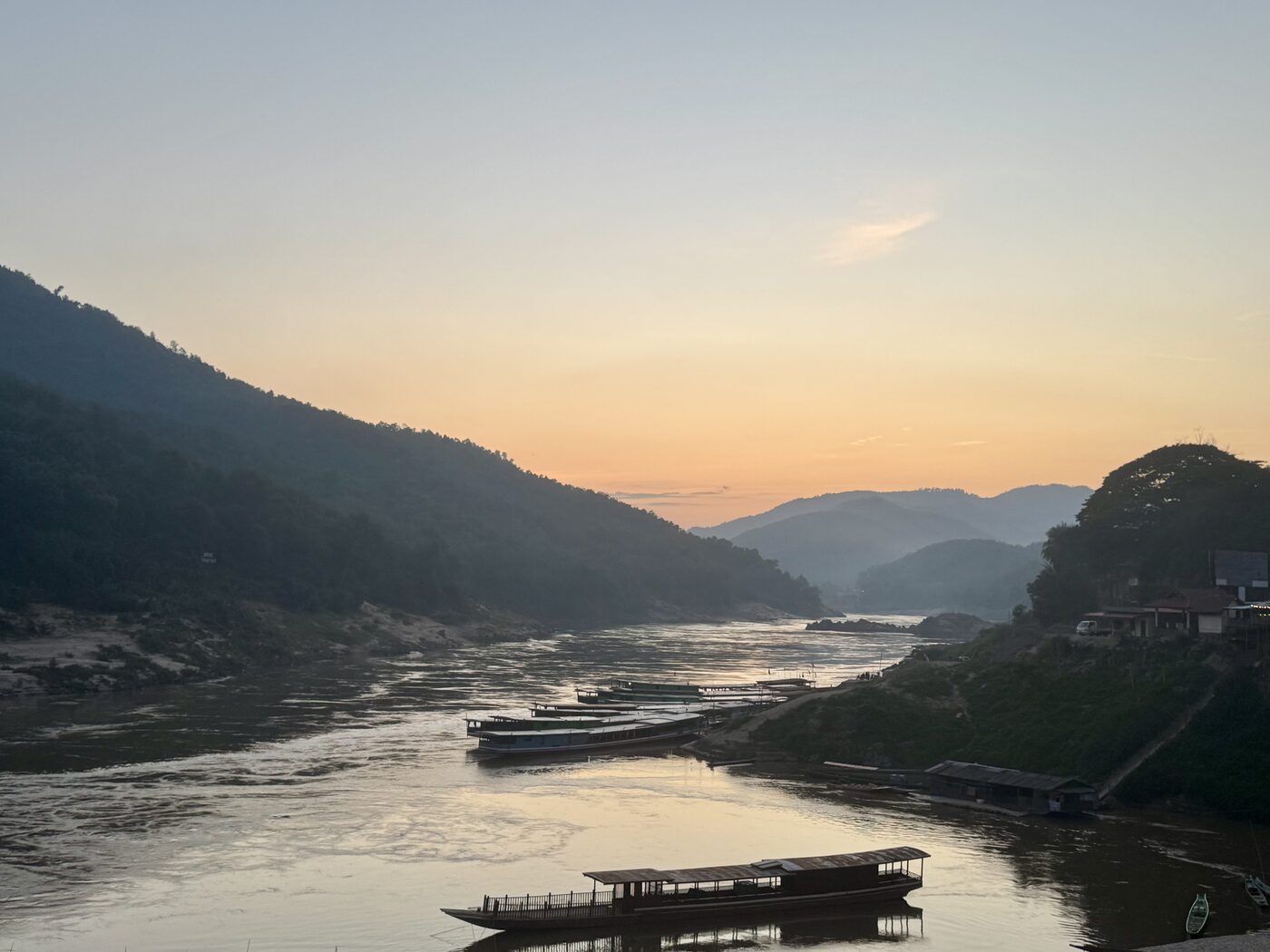
That’s how we met Vieng.
The invitation
Vieng ran our small riverside hotel. He had just opened a bar down the road, simple and homey, overlooking the water.
We ate good food. Drank beer. Played pool. Talked easily; his English was great, warm and direct in a way that made conversation feel effortless.
By the end of the night, he offered something unexpected: he would help us reschedule our boat, extend our stay, and take us to his home village the next day, an hour away. He wanted us to see where he grew up.
We said yes.
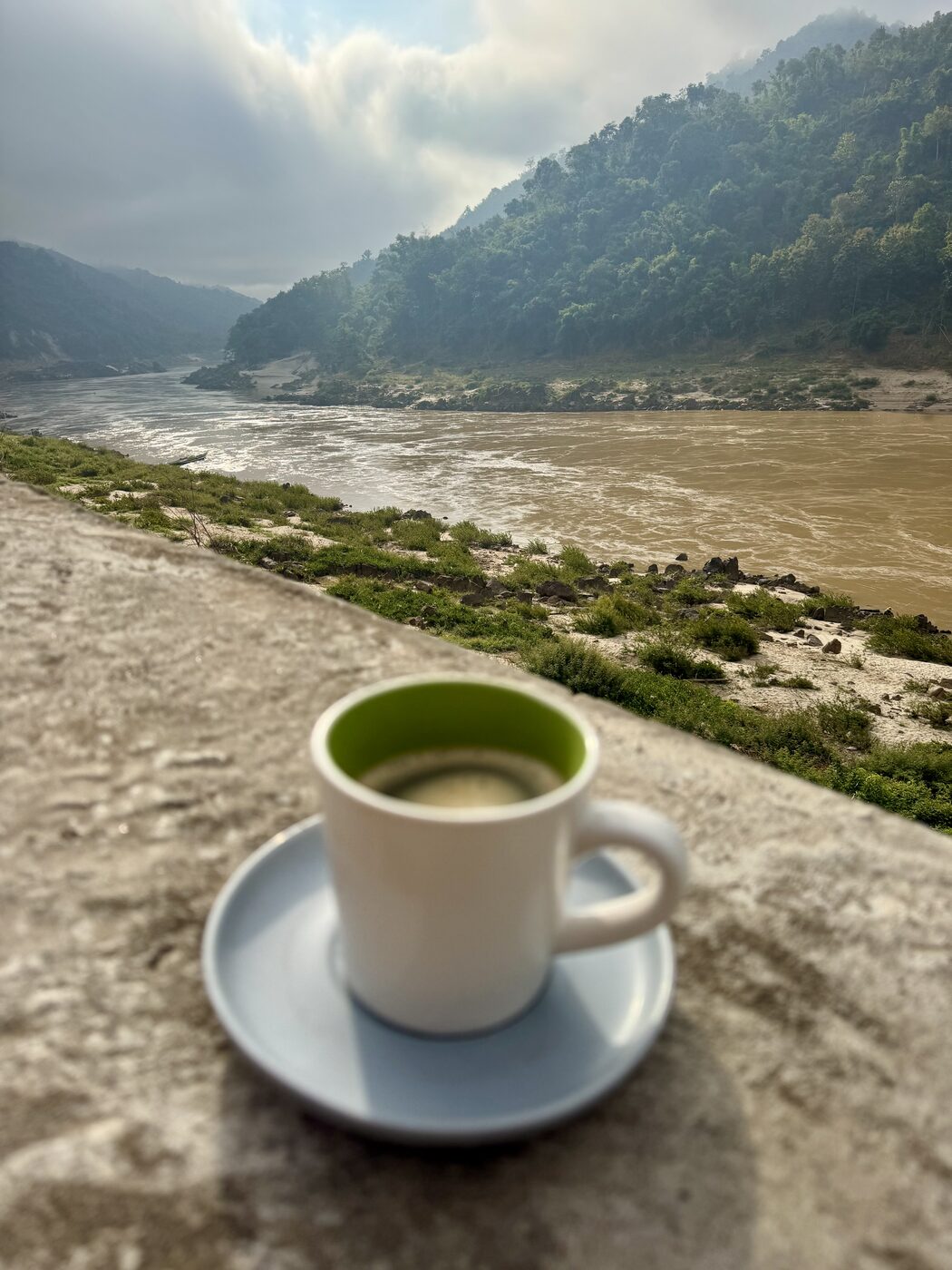
The next morning, we drank coffee on the patio and watched our original boat load up and disappear down the river without us. We were staying.
His village
The drive wound through dirt roads and small rural communities, and Vieng talked the whole way. He named each village as we passed it. He told us about growing up out here: there was no school in his town, so he went two towns over. The kids walked there, stayed the week, walked home, and did it again. He had one set of clothes to wear for that week.
He said all of it plainly, as just how things were.
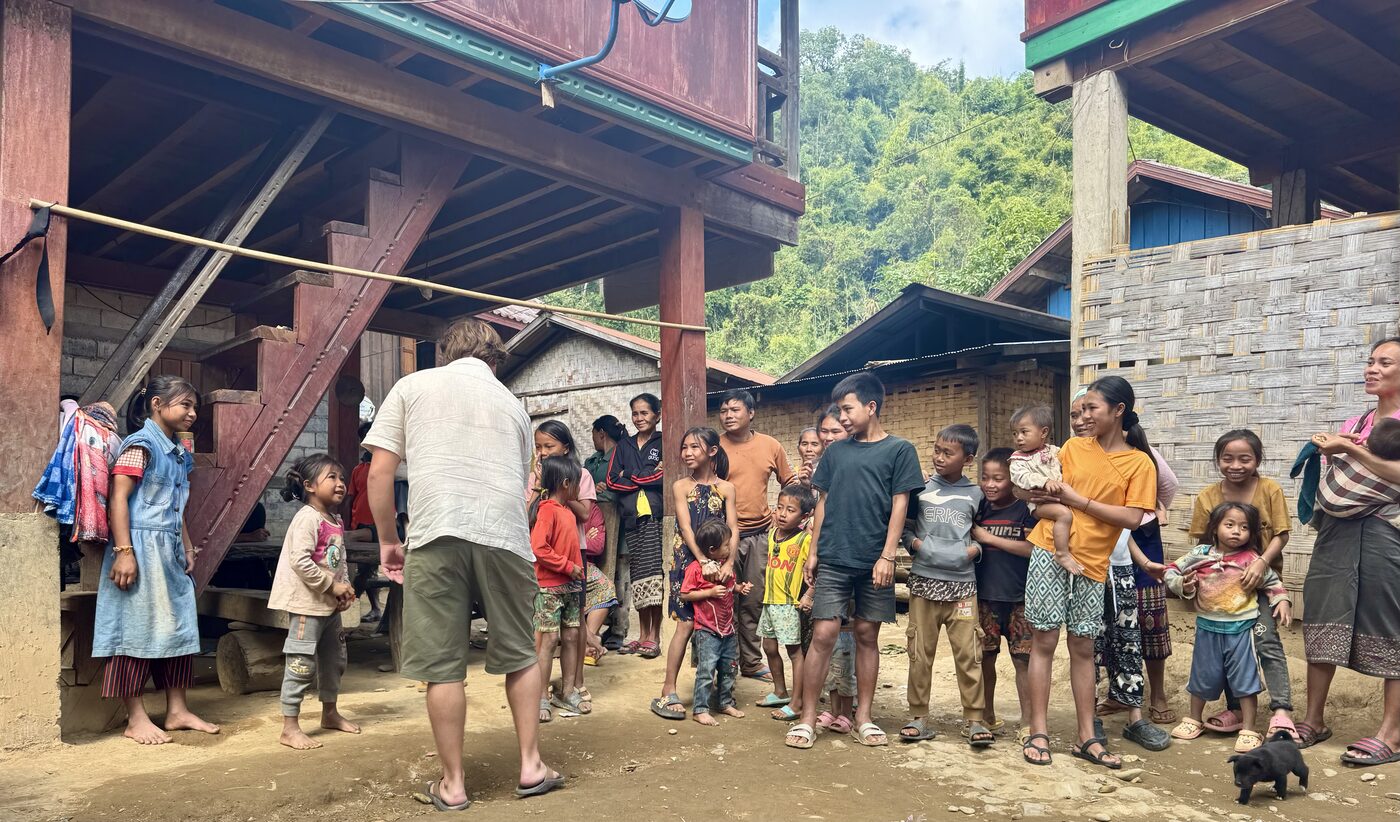
When we arrived, you could see how proud he was. People had put on their good clothes. Children paused to stare, smiling wide.
He introduced us to his mother. His family. Showed us the newly built school.
Before we’d even settled in, we handed out the candy we’d brought. Vieng had suggested it. The kids went absolutely wild. That kind of excitement doesn’t need translation.
We watched children fish, bathe, and play in the river like it was the center of the world, because it was.
His mother made lunch for Vieng, the driver, and the two of us. It was one of the most authentic meals of our entire trip. Simple, careful, made with intention.
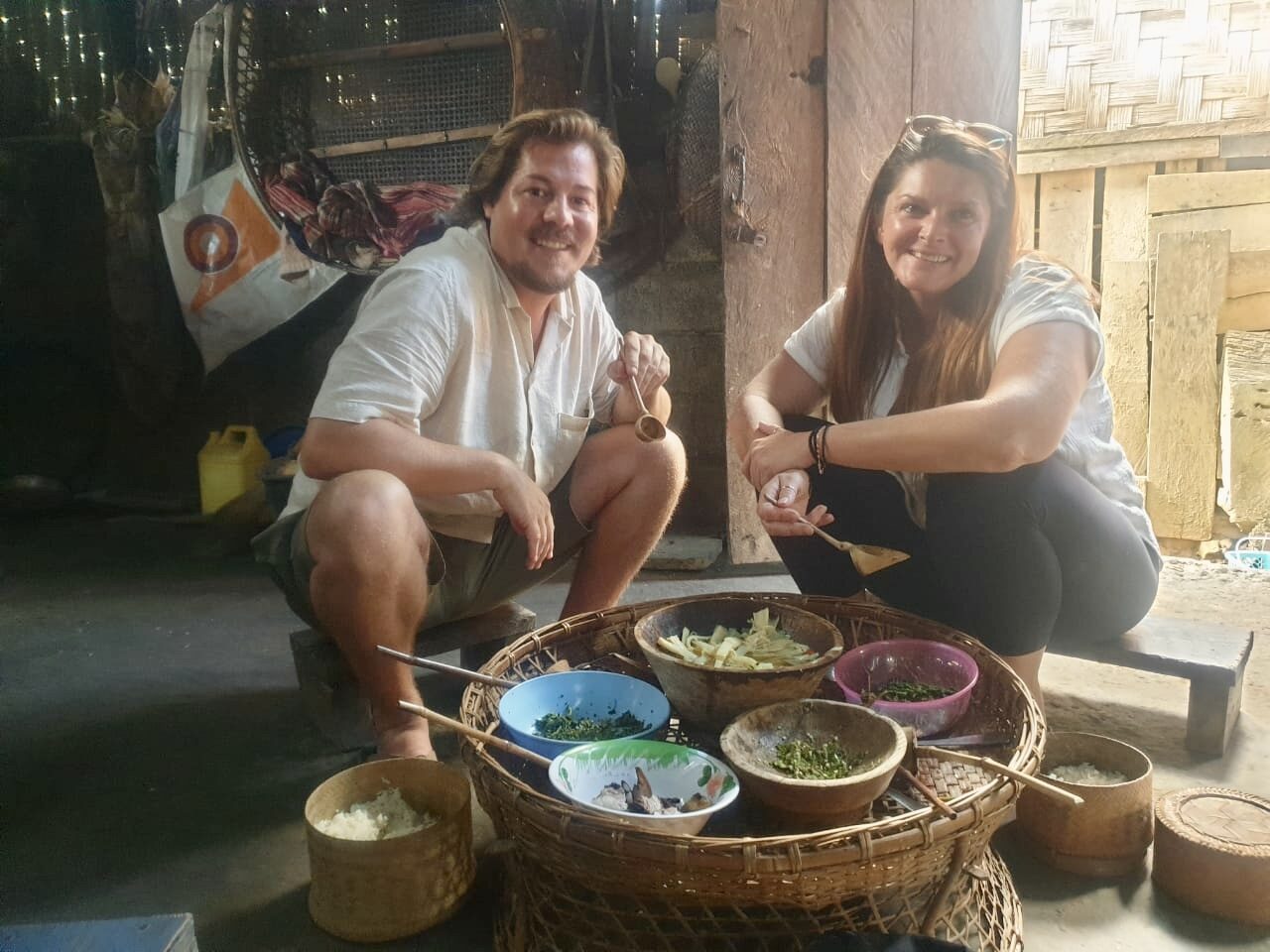
After lunch, the townspeople began to gather. Vieng’s family brought out the rice wine. Then more people. Then more rice wine. We sat together for hours, laughing, drinking, listening, the conversation a loose mix of Vieng translating and the universal language of people who are glad to be together.
It was exactly what we had imagined a year earlier, back when we were still hesitating to book this trip at all.
This was what we had hoped travel could be.
The shift
As we were preparing to leave, Vieng approached us quietly. We were going to take his sister-in-law and her baby to the doctor. The baby was sick.
We didn’t understand how serious it was until we were in the truck.
We sat in the back seat. The mother sat between us. The baby’s eyes rolled back. His breathing was strained. Sweat ran down his mother’s face.
We were driving fast, and the dirt road still felt longer on the way down.
We pulled into the “doctor’s office.” No one was there. We were sent to the “hospital.” We rushed inside.
There was no doctor waiting. No machines. No urgency the way we understand it.
We left that room. We sat on the concrete steps outside. Three little boys stood on their toes, trying to see through the window. And all you could hear were a mother’s screams.
Full circle
Earlier that day, sitting in the village, Jesse and Vieng had been talking about how beautiful this life was. No traffic. No calendar. Nobody running anywhere. Jesse said the thing out loud that everyone thinks in a place like that: how nice it would be to live somewhere this quiet, away from the rat race.
Vieng let it sit for a second. Then he looked at him and said quietly, “Yes… but people get sick and die.”
He said it there, in his own village, in the middle of the best afternoon we’d had in months. It hit hard enough that neither of us had an answer for it.
He told us he says a version of it to his own people, too. That there is a world out there running on different rules than theirs, and the kids should at least know it exists so they can choose. He wasn’t apologizing for where he came from. He was refusing to let it be the only thing anyone there could picture.
At the time it sounded philosophical. By evening it was a fact.
The baby didn’t make it.
What travel really gave us
We think about that baby more than we have ever told anyone.
A fever, a dirt road, and a room with nothing in it. At home he would have been seen within the hour and been fine by the weekend. That is the whole difference. Not effort, not love, not anything his mother did or failed to do. Just where he happened to be born.
When you travel slowly, when you sit in someone’s home, meet their mother, share rice wine with their neighbors, ride in their truck, the world stops being abstract. It becomes faces, names, breath.
You start to realize how much you take for granted. Access, healthcare, certainty. Things you never had to question, and things a lot of the world lives without on an ordinary afternoon.
We spent that whole day wanting Vieng’s life. He spent that whole day trying to show his village that there is more than this. Both of those are honest, and they happened at the same table.
It took us a long time to be able to hold it. For a while we couldn’t set the two halves of that day next to each other at all.
The grass looked greener from the truck. It usually does. You don’t find out what the other side actually costs until you are sitting in the back seat with someone who has been paying it their whole life.
That is what that day gave us. Less certainty about whose life is better than whose, and a great deal more compassion for the people living the one we had spent all afternoon romanticizing.
Vieng’s bar is The Hive, in Pakbeng, northern Laos. If the slow boat puts you there for a night, go find it. Stay an extra day if he offers.