Eight months was the plan. We booked it that way on purpose, because the van had already taught us that the good stuff shows up after you stop moving, and three weeks in a country doesn’t buy you that.
What we didn’t plan was the shape it took. This part of the world keeps handing you one more reason to stay: one more bus to catch, one more village you’ve never heard of that turns out to be the one you’ll talk about for years.
We arrived in Bangkok in the fall with a rough route and eight months in front of us. We left from a tiny airport in Bali, heading to Switzerland to stay with two friends we’d met on a motorbike loop in northern Vietnam, people we hadn’t known existed when we landed. That felt like the right ending. Or maybe not an ending at all.
This is the full story: every country, every highlight, and the moments in between that don’t make the Instagram grid but make the trip. If you’re planning your own time in Southeast Asia, we hope this gives you something real to hold onto.
We also drew the whole route on our map, leg by leg. Fly the loop, then come back for the long version.
The route at a glance
If you want the whole eight months as a route rather than a read — every stop in order, with the nights we spent in each — that lives here: the full Southeast Asia itinerary.
Thailand
Bangkok — 8 days
We flew in from Mexico. Twenty-seven hours of travel time, door to door.
So the first few days in Bangkok were about adjusting and very little else. We slept a lot, at strange hours, and woke up starving in the middle of the night with no sense of which way anything was. That’s the honest version of landing on the other side of the world.
Once we came out of it, the city was immediately, overwhelmingly itself: dense and golden and chaotic in a way that makes you feel very small and very alive at the same time.
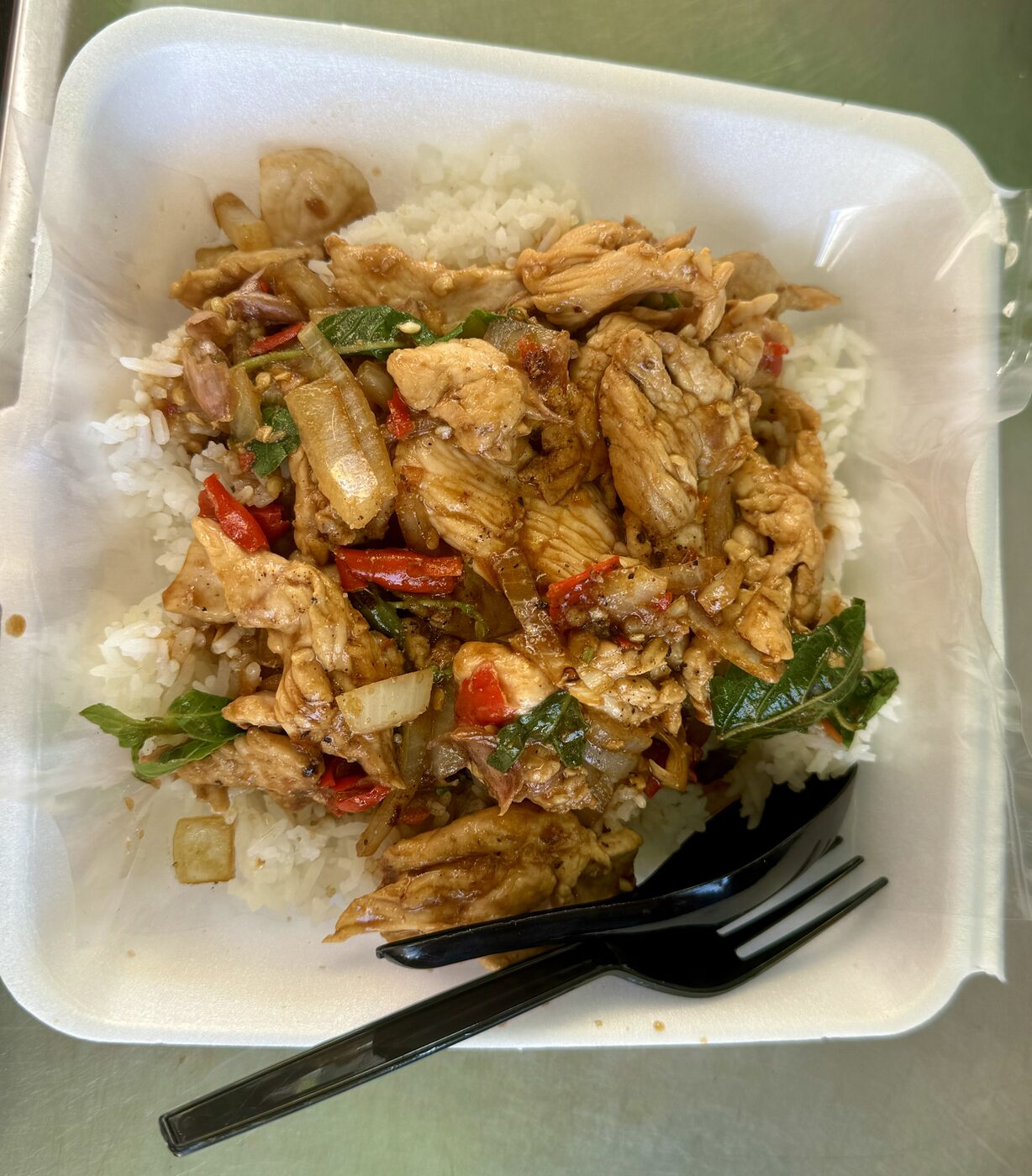
Eight days felt like both too long and not nearly enough. We wandered temples in the early morning before the heat settled in, ate our way through street food markets, and started to understand the rhythm that would carry us through the next eight months: wake up early, move slowly, say yes to things you don’t entirely understand yet.
Chiang Mai — 26 days
We didn’t intend to stay in Chiang Mai for nearly a month. We booked a week and then kept extending. It’s that kind of place.
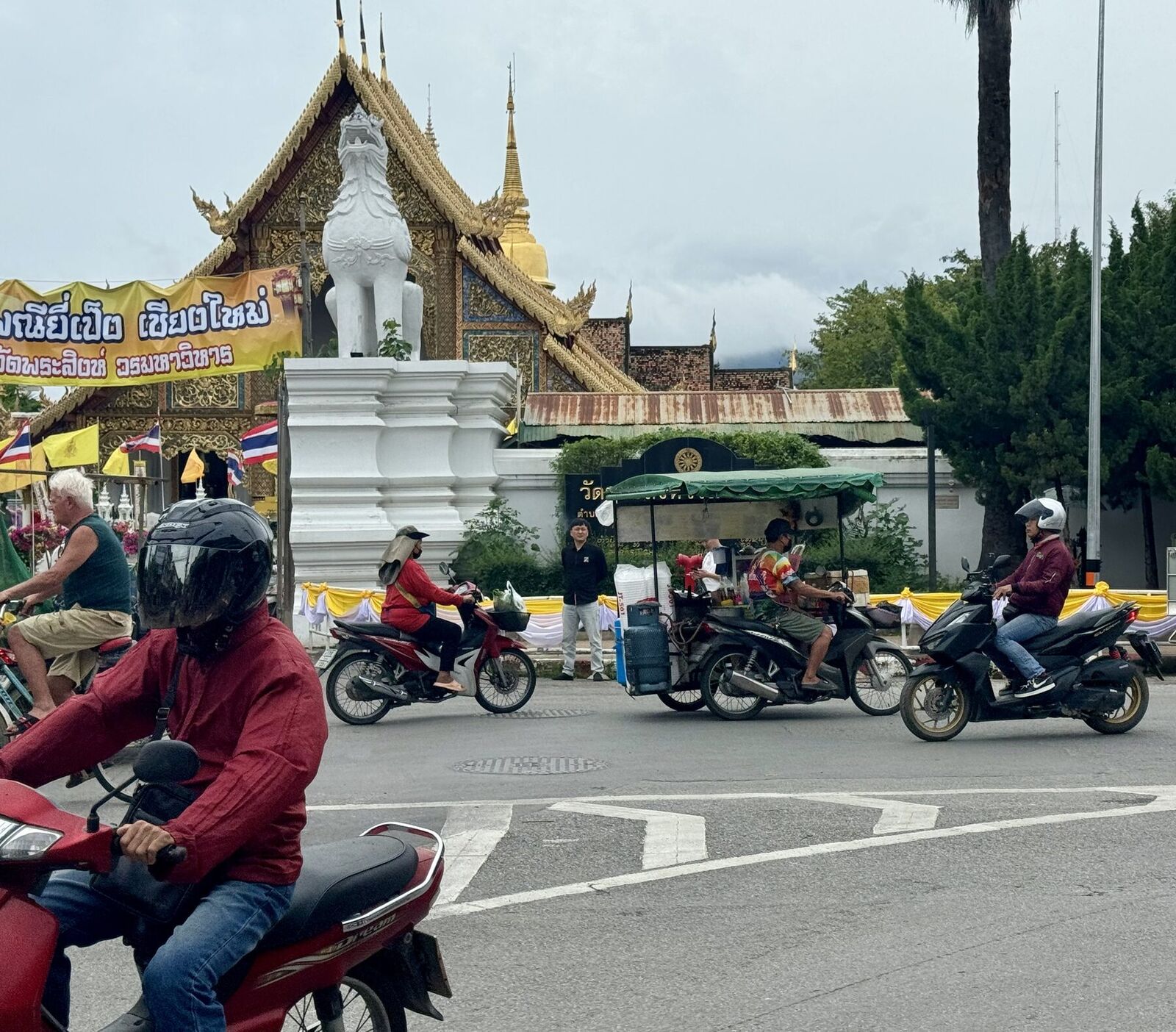
We moved through four different neighborhoods during our stay (Phra Singh, Hai Ya, Chang Khlan, and in and around the old city) and each one had its own texture. The old town with its moat and crumbling temple walls felt almost like a village. Chang Khlan buzzed with the Night Bazaar. Hai Ya was quieter, residential, the kind of place where you find a coffee shop that becomes yours.
The reason we were there for 26 days was partly the city itself and partly timing. We were there for the Yi Peng lantern festival, Loi Krathong, and if you’ve ever seen a photograph of thousands of paper lanterns lifting into a dark sky above a city and wondered if it could possibly be as beautiful in person, the answer is that it is more beautiful. It is one of the most extraordinary things we have ever witnessed. We stood in a crowd of strangers and launched a lantern together and didn’t say anything for a long time.
We also spent a day in the Mae Wang District to see elephants, ethically, at a sanctuary where they roam freely and you walk among them rather than ride them. We’re still not over it.
Pai — 1 week
A van carried us up through 762 curves of mountain road to Pai, a small town in the hills with a pace that undoes you a little. Countryside coffee shops. Hammocks. Rice fields. Long stretches of the day spent lounging and calling it a plan. We rented motorbikes and explored for a week.
We want to say this clearly: if you have been curious about riding a motorbike but haven’t done it yet, Pai is the place to learn. The roads are manageable, the traffic is forgiving, and the scenery is the kind that rewards you for moving slowly. By the end of the week we felt like we’d always known how to do it. That confidence would carry us a long way, including onto the Ha Giang Loop months later in Vietnam.
Chiang Rai & Chiang Khong
From Pai we made our way to Chiang Rai, stopping to see the White Temple (Wat Rong Khun) and the Blue Temple (Wat Rong Suea Ten). Neither photograph quite prepares you. The White Temple is all reflective glass and intricate white plasterwork; the Blue Temple glows electric in the late afternoon. We spent more time than we planned and didn’t regret it.
Chiang Khong was the edge of Thailand, a small border town on the Mekong where you catch the boat into Laos. We arrived expecting to spend one night. But the town had a quiet quality we liked, and by then we were learning to trust that instinct.
Laos
The slow boat — Pakbeng & beyond
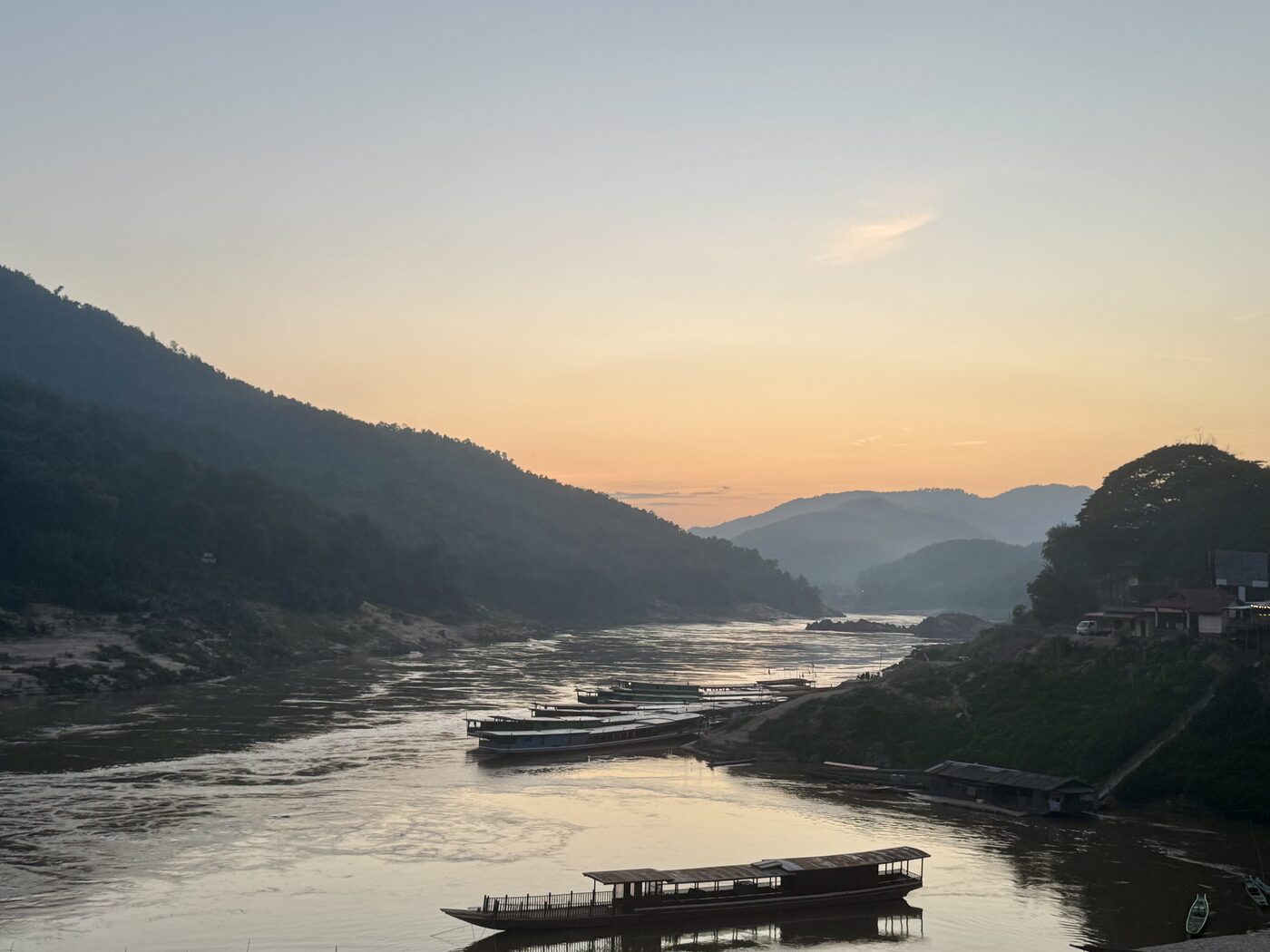
The slow boat from the Thai border into Laos is a two-day journey down the Mekong on a long wooden vessel with rows of seats and views that scroll past like a painting you can’t quite believe is real. It is one of the most recommended experiences in Southeast Asia, and the recommendations are earned.
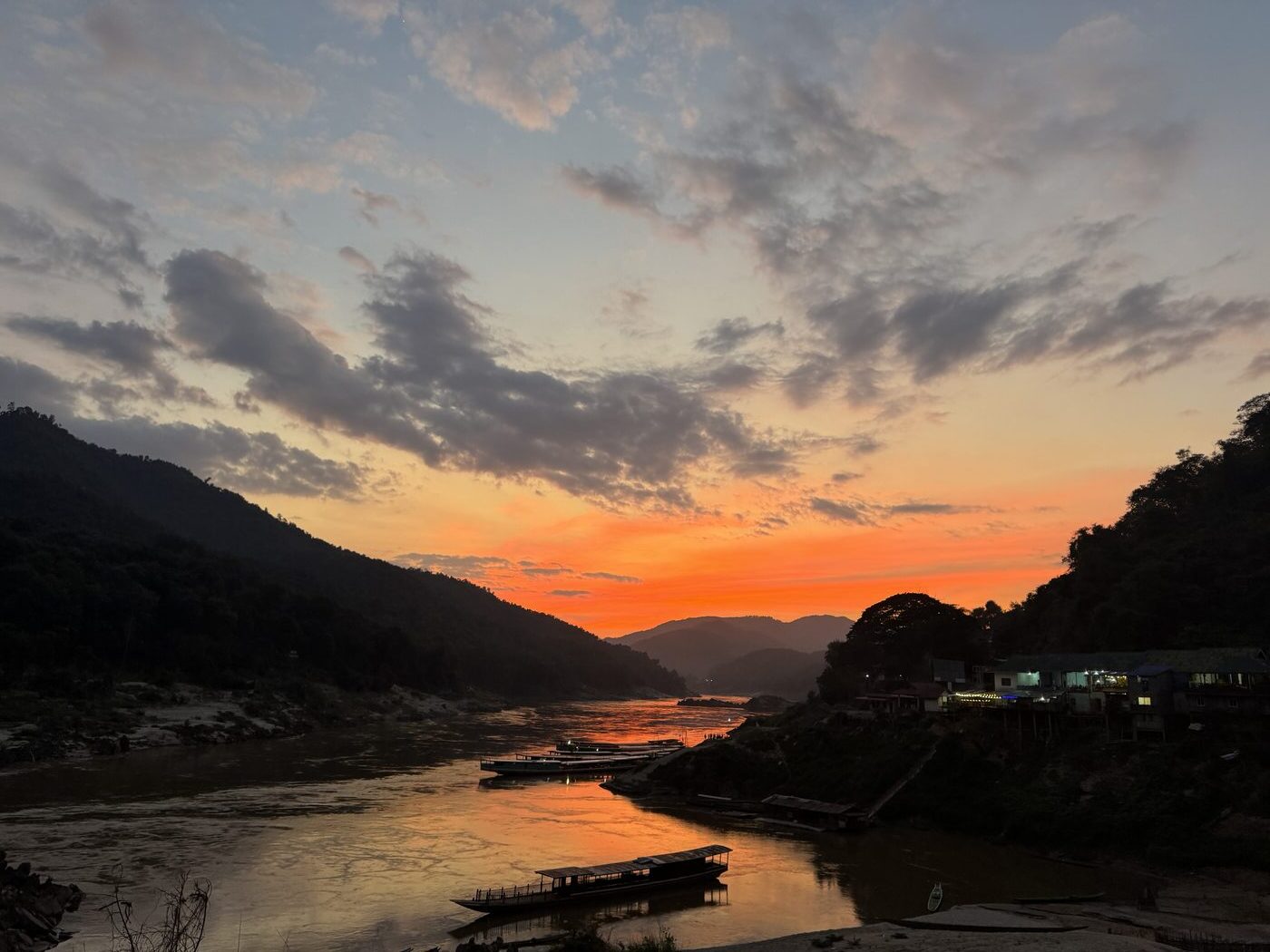
We were supposed to stop one night in Pakbeng, the small river town at the halfway point, and continue to Luang Prabang the next morning.
We stayed two.
The reason was a man named Vieng. He managed our guesthouse and owned the bar down the road, and we met him the first evening with the ease that comes from being strangers in a place where everyone is a stranger. He was from the area. He knew everyone. He took us to dinner and to his bar and then, the next day, an hour up into the hills to the village he grew up in.
We canceled our onward ticket and let the boat leave without us. We saw the town, and then a good deal more than the town, through someone else’s eyes, which is the only way to really see a place. What should have been a transit stop is still the part of Laos we talk about most.
That day did not end the way it started, and it changed how we think about the whole trip. We wrote about it properly here: The River That Gave and Took.
Vieng, if you ever read this: thank you.
Luang Prabang — 12 days
Honest answer: Luang Prabang didn’t land for us the way it seems to land for everyone else.
It is objectively beautiful. It sits on a peninsula between two rivers, its streets lined with French colonial architecture and saffron-robed monks and temples that glow in the evening light. Every morning the monks walk in procession through the town at dawn for the alms-giving ceremony, tak bat, and if you witness it with the quiet it deserves, it will stay with you.
We stayed 12 days, and that was a few too many. We weren’t there because we couldn’t pull ourselves away. We were getting over a cold and waiting on our next visa, and those two things together turned a stop into a stay.
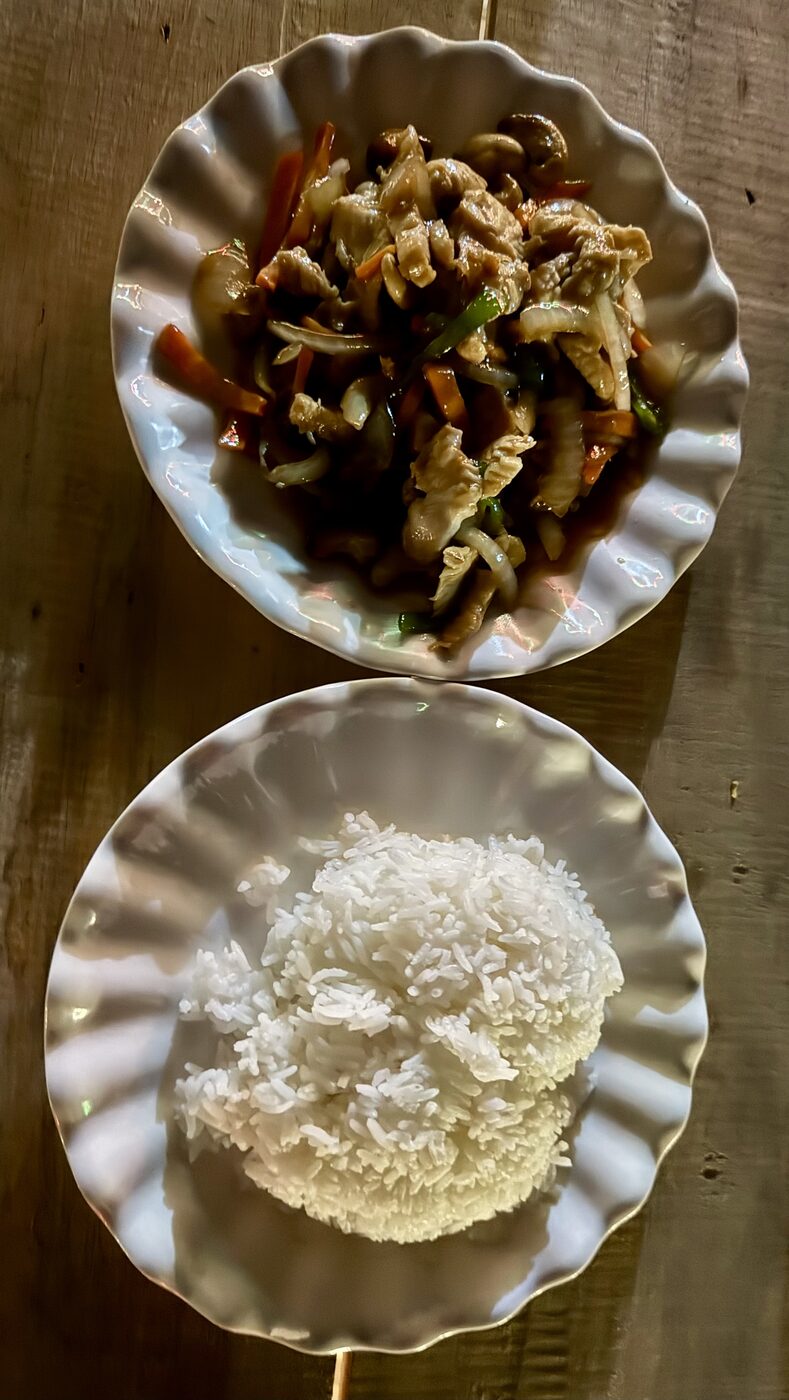
We made it a good one anyway. We rented a scooter and rode out to the waterfalls. We climbed Phu Si hill at sunset. We ate laap and sticky rice and drank Beer Lao on slow evenings by the water.
Worth saying plainly in a guide like this: not every famous place is going to be your place, and that isn’t a failure on anyone’s part.
Then we got on a 27-hour bus to Vietnam.
That bus was an entire experience of its own, and we’ve written it up properly in our Southeast Asia budget guide. Short version: a mountain range, a border at dawn, and a fraction of the cost of flying. We’d do it again.
Vietnam
Hanoi — first stay, 5 days
Hanoi arrives loudly. The air is heavy and the whole town is whizzing. After the gentleness of Laos, the capital of Vietnam is a city that insists on itself: motorbikes moving in every direction at once, sidewalks that function as parking lots and restaurants simultaneously, a street food culture so good and so cheap it becomes difficult to eat anywhere indoors.
We spent five days getting our bearings, eating bun cha and pho and egg coffee, wandering Hoan Kiem Lake in the early morning, and preparing for what came next.
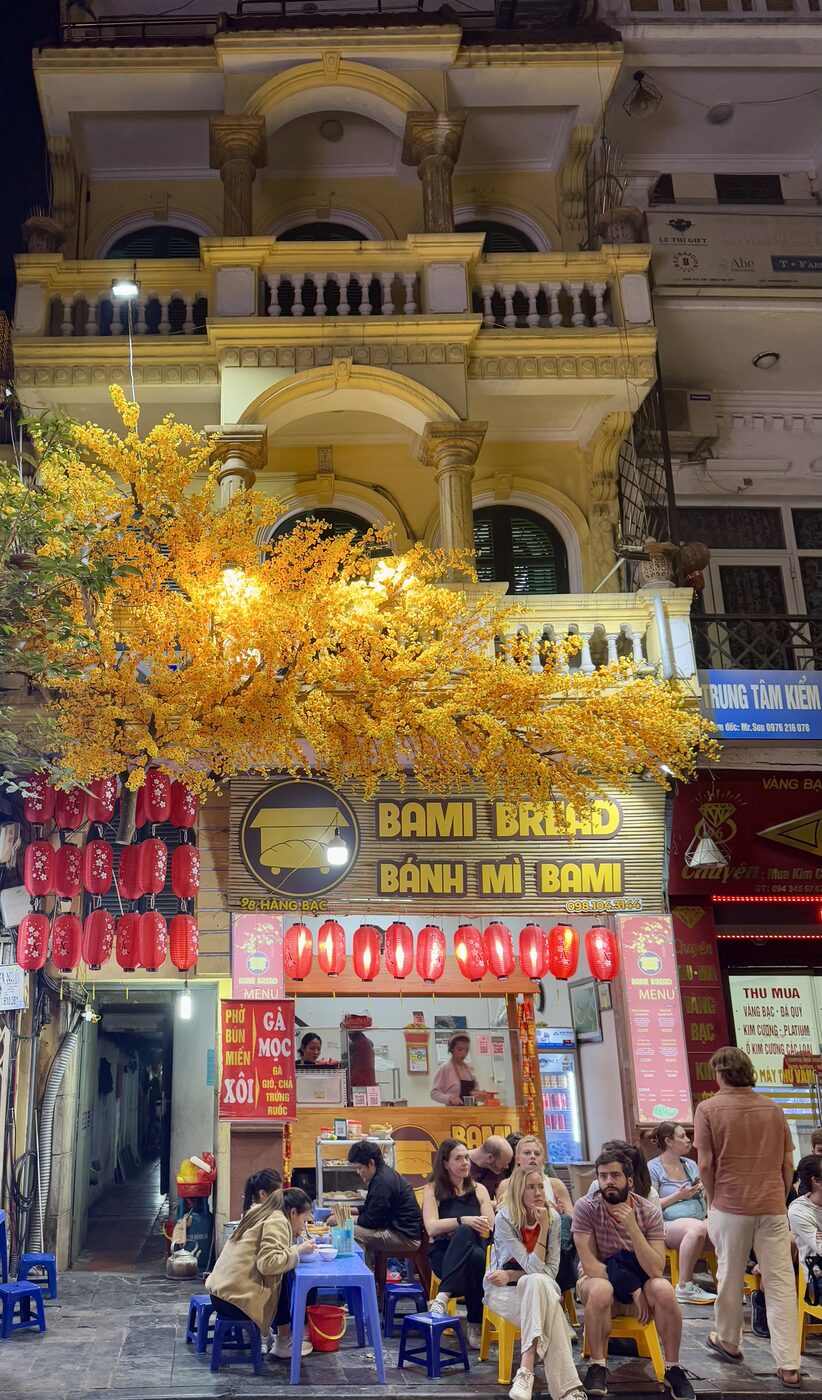
We also found a bánh mì shop under a big yellow tree and went back three times. On the last visit they waved us behind the counter, unstacked two extra stools, and handed us cold beers while we waited. That one got its own essay: A Plastic Stool in Hanoi.
The Ha Giang Loop — the highlight of the trip
We took a bus from Hanoi to Vi Xuyen (Thuan Hoa), near the Chinese border in far northern Vietnam, and rented motorbikes for four days on the Ha Giang Loop.
We want to be careful here not to over-describe it, because some things lose something in description. But we’ll try.
The Ha Giang Loop is a circuit through some of the most dramatic mountain scenery in Southeast Asia: limestone karsts rising straight from the valley floors, rice terraces cut into steep hillsides, passes that put you above the clouds and below them alternately as you ride. The roads are narrow and winding and occasionally terrifying. The villages are small and the people are Hmong and Tay and Lo Lo. You ride through places that still feel remote in a world that has very few remote places left.
We rode for four days. We got lost twice and didn’t mind. We pushed our bikes up a hill we weren’t ready for. We stopped at a viewpoint and sat there longer than we meant to because neither of us wanted to be the one to say we should keep moving.
And we met Daniel and Serena.
It was just the four of us on the tour, which is a good part of why it worked. We rode together, ate together, and stayed up later than any of us had planned. By the end we knew we’d made friends we hadn’t gone looking for.
They’re from Switzerland. They’re still some of our closest friends. We’ve stayed with them there, and they’ve come to visit us twice since this trip. None of that was visible yet from a mountain road in northern Vietnam, but we’d end these eight months on their couch.
Ha Long Bay — and the best doctor’s visit we’ve ever had
We didn’t go back to Hanoi after the loop. We went to Ha Long Bay.
Which is where Jesse got sick, and where we had our first experience with medical care abroad.
We had braced for the version everyone warns you about. We got the opposite. It was the fastest, cheapest, most efficient doctor’s visit either of us has ever had, in any country, our own included.
A translator was assigned to us the moment we walked in. We were taken straight to the right doctor and seen right away: two doctors and our translator, results reviewed on the spot. No waiting room. No paperwork gauntlet. No billing department. We paid, walked across the street with the prescriptions, and had them filled.
Start to finish, under 45 minutes and about $50.
We’re not claiming that’s what you’ll get everywhere in the region. But if part of what’s keeping you home is the fear of getting sick somewhere foreign, it’s worth knowing that the system we were most nervous about is the one that has treated us best.
Ninh Binh — 5 days (and Jesse’s birthday)
We went to the Ninh Binh region next, a landscape sometimes called “Ha Long Bay on land,” with limestone karsts rising from rice paddies and river valleys. We took a rowboat through the caves at Trang An and watched herons land in the fields outside our guesthouse window.
Jesse’s birthday fell here, and we spent it climbing. We hiked to the top of a mountain at Hoa Lư, in Ninh Nhất, for a view that made every step of it make sense: karst towers, paddies, river, the whole valley laid out underneath. Not a bad way to turn a year older.
Hoi An — TET
We timed it right and arrived in Hoi An for TET, the Vietnamese Lunar New Year, the most important celebration in the Vietnamese calendar. Hoi An during TET is something specific: the old town draped in red and gold lanterns, the streets transformed, families reuniting, the whole city lit differently.
We spent a week there, eating cao lau and white rose dumplings, making our own lanterns, taking a coffee class, and sitting along the Thu Bon River in the evenings watching lanterns float downstream.
Nha Trang — 4 days
A beach city on a wide, beautiful bay. This is where you rent a scooter and drive the coastal road for an afternoon just because you can.
We went to the Po Nagar towers, which have been standing there since long before the city grew up around them, and then to the Thap Ba mud baths, which is exactly as good an idea as it sounds after a few months of buses.
Da Lat — 5 days
Cooler, up in the hills, with French colonial architecture, strawberry farms, and a persistent drizzle we eventually made peace with.
Da Lat is where we had our first hot pot, and we have thought about it regularly ever since. We also spent a day out in the mountains with the waterfalls, which was the most fun either of us had on a day we hadn’t planned.
Ho Chi Minh City — 1 week
The energy is different from Hanoi. Faster, more modern, less ancient-feeling and just as overwhelming.
Daniel and Serena were passing through, so we met back up with them. Night markets, hookah bars, and the glass skywalk, which is a strange thing to stand on and worth doing anyway. We got tattoos, which we had not planned and do not regret.
We also visited the War Remnants Museum, which is not an easy afternoon but is a necessary one.
The Mekong Delta — 3 days
The four of us carried on together into the Mekong Delta, a maze of river channels and floating markets and villages where life still runs along the water.
We booked nothing in advance. What we did instead was take a last-minute local river tour with a guy named Thomas, and that turned into the entire day. He took us to a rice paper farm. Then we talked him into running us out to the river market, which was on no itinerary anywhere. We drove around for hours. It ended with all of us sitting on the roof of his wife’s pineapple boat, eating fresh pineapple.
You can’t book a day like that. You can only leave room for it.
We said goodbye to Daniel and Serena assuming it would be a while. We were wrong about that in the best way.
Phu Quoc — 3 days
A ferry to Phu Quoc, an island in the Gulf of Thailand near the Cambodian border. We’d planned on three slow days and ended up busier than that.
One day went to Starfish Beach. Another started early, riding through morning traffic all the way to the far side of the island to Sunset Town, then taking the gondola out across the water to the amusement park. That ride is long enough that it stops being transport and becomes the thing itself.
Cambodia
Sihanoukville & Koh Rong
We took a van from Phu Quoc into Cambodia, arriving in Sihanoukville for one night before catching a ferry the next day to Koh Rong.
Koh Rong gives you two options, essentially: a backpacker side and a luxury side. We picked the cheaper one, and we suspect that’s most of why we only lasted a night. It skewed younger and louder than what we wanted right then, which is a perfectly reasonable thing for a beach island to be. It just wasn’t ours.
So we went back to Sihanoukville, to the hotel we’d stopped at on the way through: Onederz. That ended up being the best part of Cambodia for us. You never had to leave for anything, which suited us fine, because we weren’t especially trying to. The food and drinks were good, the staff were great, the place itself was nice, and the pool was perfect.
We extended two more nights purely because of it. Sometimes that’s the whole story. You find somewhere that gets the details right and you don’t need another reason.
Back through Bangkok
A bus back into Bangkok for a week. We had suits made, something we’d been planning since Chiang Mai and finally had the timeline to do properly. Bangkok’s tailors are excellent and the process, if you have the time, is worth it entirely. We walked out with clothes that fit in a way off-the-rack never quite manages.
Southern Thailand
Phuket & Krabi
A flight into Kathu, Phuket, for five days on an island we’d heard polarizing things about. Phuket is big enough to be several places at once: yes, there is the strip of Patong and the roar of tourist infrastructure, but there are also quieter beaches and better food than its reputation suggests if you know where to look.
A ferry from Phuket to Ao Nang, Krabi, for four days. Krabi is spectacular in a way that photographs still somehow undersell. The limestone cliffs dropping straight into green water, the longtail boats at sunrise, the beach at Railay that you can only reach by sea. We kayaked, we hiked, we ate too much seafood. We were sad to leave.
Malaysia & Singapore
Kuala Lumpur, Penang & Singapore
A flight into Kuala Lumpur for four days. KL is a great city: cosmopolitan, food-obsessed, the kind of place where you can eat your way through a dozen different culinary traditions without trying very hard.
A ferry to Penang (George Town) for three days. George Town might be our favorite city in Malaysia. UNESCO-listed for its historic architecture, covered in street art that somehow manages not to feel forced, home to one of the best food cultures in a country already renowned for its food. We ate char kway teow and asam laksa and cendol and wished we had more time.
Two more days back in KL before flying to Singapore for two days, which is not enough time for Singapore, frankly, but enough to eat at hawker centres, walk the colonial district, and feel the order and ambition of a city-state that decided to take everything seriously.
The Philippines
Manila, Bohol, Cebu & Palawan
The Philippines felt like a reset. After weeks of mainland and peninsula travel, we were suddenly on islands again: a different light, a different pace, a warmth in the people that we noticed immediately.
Four days in Manila. Three days in Bohol, where the Chocolate Hills rise in hundreds of identical mounds from the flat land and tarsiers cling to branches in the dark with their enormous eyes. Four days in Cebu, where we did the canyoneering in Kawasan Falls, which involves jumping off cliffs into turquoise water and swimming through canyons and is one of the most purely fun things we did in eight months.
Then Palawan. Puerto Princesa for a few days, the Underground River, then the long road north to Port Barton: four days in a village so small it barely registers on most maps, with a beach that justifies the journey entirely.
El Nido & the four-day boat
El Nido is the kind of place that travel writing reaches for superlatives and runs out. The lagoons, the limestone karsts, the water that really is that color. We spent three days there and then boarded a boat.
The four-day journey north through the Palawan archipelago is slow and occasionally uncomfortable and completely worth it. You sleep on the boat. You wake up to different islands. You eat simple meals on deck and swim at stops and watch the stars in a way you can’t on land.
By the time we reached Manila we felt like different people than the ones who boarded, which is a thing a good journey does to you.
Indonesia
Bali & Nusa Lembongan
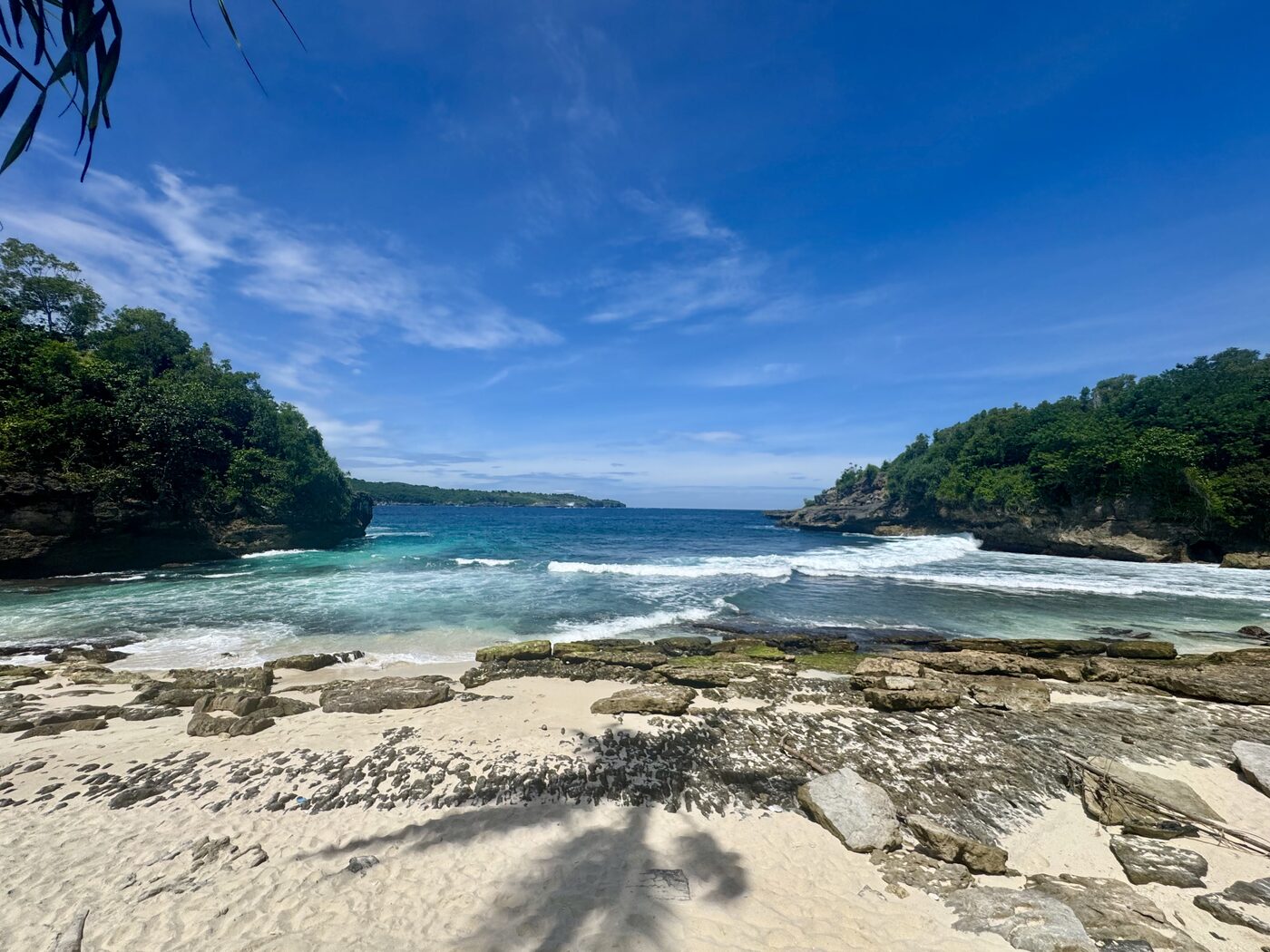
We flew from Manila to Denpasar, Bali, arriving in the late afternoon and catching the ferry to Nusa Lembongan the next morning. Lembongan is a small island southeast of Bali, car-free and quieter, with mangroves and surf breaks and a pace that Bali itself has largely outgrown.
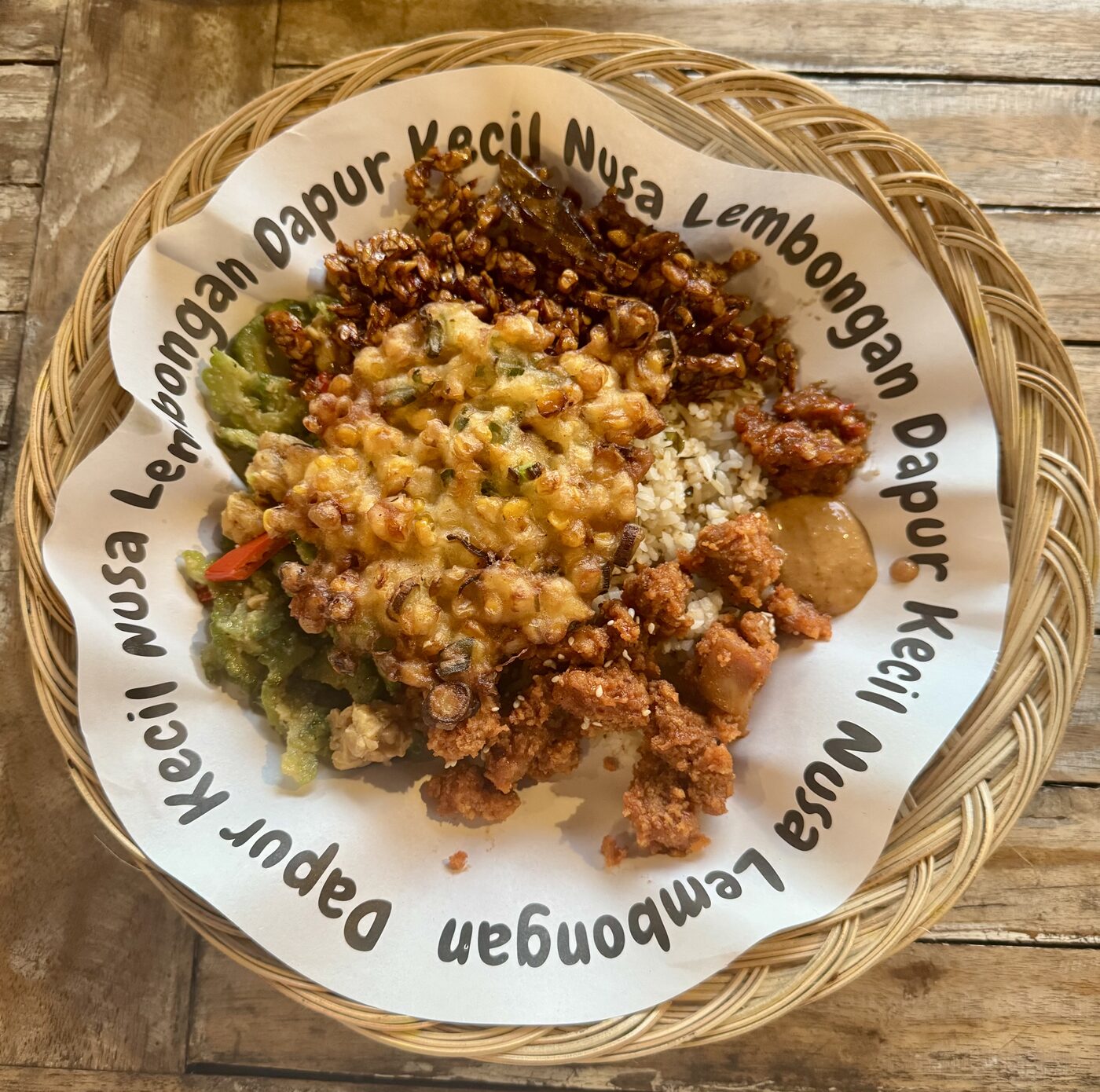
We stayed six days. We rented scooters and circled the island in an afternoon. We watched surfers from a cliff. We ate at Sapir Kecia so many times that the woman running it knew our order, and we would eat there right now if we could.
We also got invited to a birthday party by the guys at the dive shop next door, which turned into one of the best nights of the entire eight months. That one has its own essay: Human Connection Across Cultures.
On our last night on Lembongan we met the Canadian family who would keep turning up for the rest of the trip.
Lombok & Senggigi
A boat to Senggigi on the island of Lombok for 11 days, our longest stop in Indonesia. Lombok sits in Bali’s shadow in the tourist imagination but has its own complete identity: the rice paddies of the central highlands, the volcanic peak of Rinjani, the Sasak culture distinct from Bali’s Hindu traditions. Senggigi is relaxed in a way that suited us after months of moving.
We settled. We cooked some meals. We made tentative friends with a cat that lived near our guesthouse. We needed that.
Lombok is also where we found our favorite hotel of the whole trip. Eight months in, it was exactly the thing we needed and hadn’t known to look for: the holiday inside the trip.
Komodo & the islands
Two nights in Flores before the Komodo boat trip, which runs three days through the islands: Komodo Island and the dragons that move through the scrub in a way that makes you very aware that they are large predators; Pink Beach, which is genuinely pink from the coral; Padar Island at sunrise from a hilltop with the three bays below.
Nobody warns you how beautiful the sailing itself is. The islands sliding past between the stops, the water changing color through the day, everything happening at boat speed. That was half of what made it good.
Our Canadian family were on this boat too, which was becoming a pattern by then.
Gili Air — 4 days
The smallest of the three Gili Islands. No motorized vehicles, quiet enough that you can hear the ocean from anywhere on it.
After eight months of buses and boats and border crossings, Gili Air was the right way to finish. Calm and slow and unremarkable, in the best sense of that word.
Back to Bali — and the end
Two nights in Bali, at the same hotel we’d stayed in on our first night, eight months earlier. We hadn’t planned that. It landed harder than we expected it to.
Our Canadian family met us there, and we had one more breakfast together.
Then we sat on the beach and tried to account for the whole thing, which is impossible to do and also a good way to spend an afternoon.
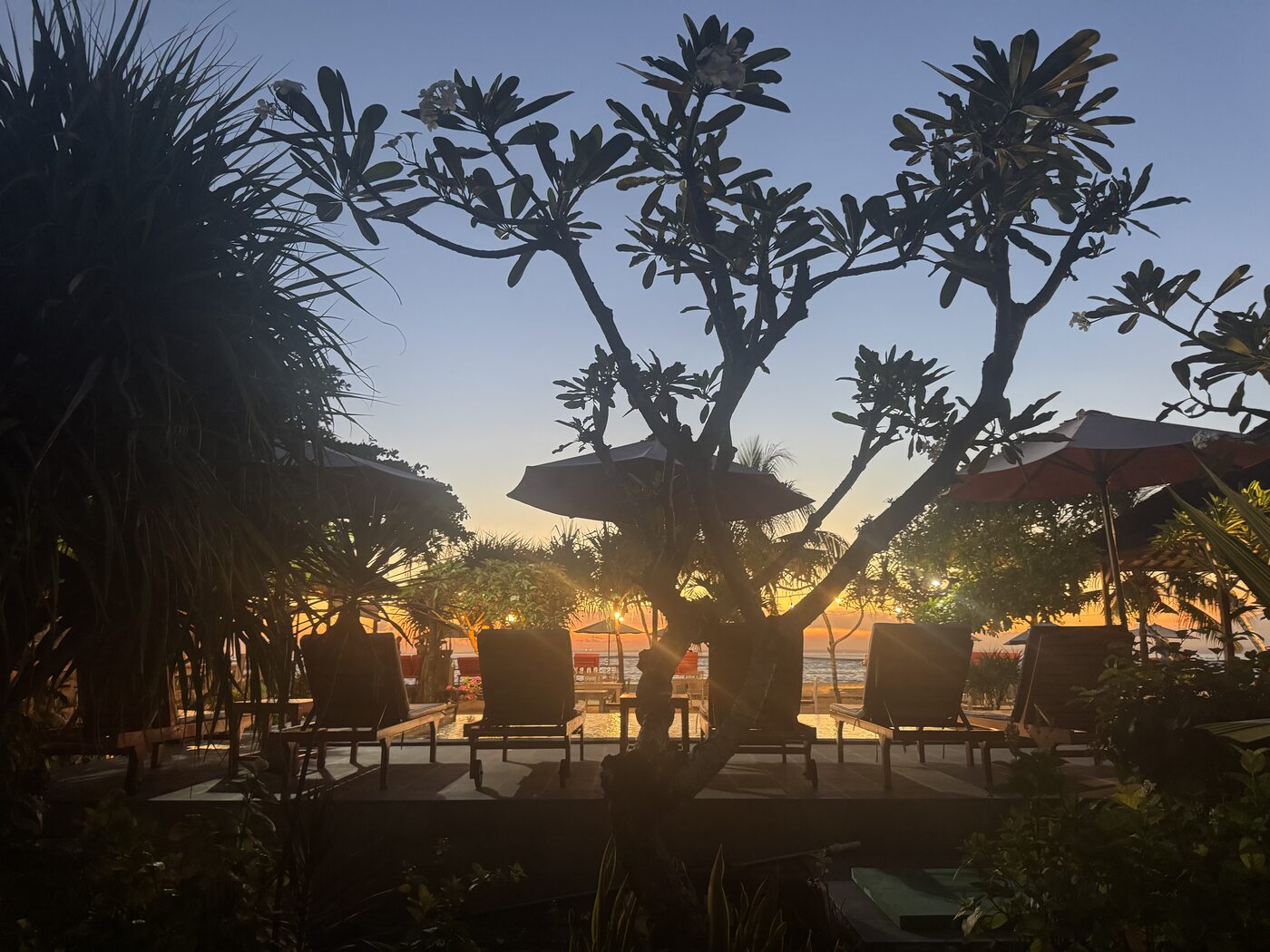
Then we flew to Switzerland.
Switzerland — the full circle
Daniel and Serena had been tracking us loosely through the months since the Ha Giang Loop. When we mentioned we were finishing, they said: come stay with us.
We spent 23 days in Switzerland. We hiked in the Alps and ate cheese and drank wine and slept in a real bed that didn’t move and cooked dinner in an actual kitchen. We talked for hours about what it had been. All of it, the slow boat and the hospital in Ha Long Bay and the four-day boat through the Philippines and the things we hadn’t expected to feel.
It was the right way to close something. With people who understood the kind of trip it had been, in a place completely unlike anywhere we’d been, letting the eight months settle into us before we had to figure out what came next.
What eight months in Southeast Asia taught us
We’ve had a lot of time to think about what the trip actually gave us, beyond the places themselves. Here’s what feels true:
The itinerary will be wrong, and that’s the whole point. We rerouted constantly: canceled tickets, extended stays, added countries. The best things that happened were not planned. Vieng in Pakbeng. Daniel and Serena on a mountainside in Vietnam. The hotel in Sihanoukville we’d never have found if we hadn’t turned around. Build in space for the thing you can’t schedule.
Slow down more than you think you need to. Twelve days in Luang Prabang. Eleven in Senggigi. A week in Pai. The places that became ours were the ones we stayed in long enough to stop being tourists in them. The temptation to cover more ground is always there and almost always wrong.
Something will go wrong, and it’s still not a reason to stay home. Jesse got sick in Ha Long Bay and we ended up in a hospital in a country we’d been in for a matter of weeks. It turned out to be the best medical care either of us has ever received, and it cost fifty dollars. That is not the story we expected to be telling. Get good travel insurance anyway, have a rough plan, and trust that you’ll figure it out, because you will.
The people are the trip. The landscapes in northern Vietnam are extraordinary. The temples in Luang Prabang are extraordinary. But what surfaces when someone asks us about the trip is almost always a person. Vieng, who let us cancel a boat ticket and drove us up to the village he grew up in. Daniel and Serena, who we met because four people happened to book the same tour, and who we now get on planes to go see. Thomas, who drove us around the Mekong Delta for hours and ended the day feeding us pineapple on the roof of his wife’s boat. The woman at Sapir Kecia who knew our order by the third visit. The Canadian family we met on our last night on one island and had breakfast with on our last morning in the country. Pay attention to people.
Eight months is both a long time and not enough. We came home with a list of places we want to go back to longer than the list we started with. That feels right.