Seventy dollars a day sounds like a constraint. In Southeast Asia, it’s closer to abundance.
We spent seven months across Thailand, Vietnam, Cambodia, Laos, Malaysia, Singapore, Indonesia, and the Philippines, and $70 a day for two people wasn’t a budget we were white-knuckling our way through. It was comfortable. Private rooms. Good food. Cold beer. The occasional boat trip or cooking class. We weren’t counting every baht or dong with a spreadsheet open. We were just living, slowly and intentionally, well within what the region actually costs.
This guide isn’t about suffering through travel to save money. It’s about understanding that $70 in Southeast Asia buys a different life than $70 at home, and knowing the decisions that keep you there without thinking about it constantly.
First, the mindset shift
The thing nobody tells you before you go is that the hardest part of budget travel in Southeast Asia isn’t the money. It’s the mental recalibration.
At home, $70 barely covers dinner for two at a mid-range restaurant. You arrive in Chiang Mai and a full meal for two (real food, cold drinks, dessert) comes to $8, and that’s at a decent sit-down place. The same meal from a street cart or the night market runs about half that. Your brain doesn’t trust it at first. You keep waiting for the catch.
There is no catch. The cost of living really is different. Vietnam, Laos, and Cambodia are some of the cheapest countries in the region, which means two people sharing costs can travel comfortably for well under $70 a day without trying particularly hard.
Once you internalize that, the trip changes. You stop second-guessing every purchase. You order the extra dish. You say yes to the day trip. You tip generously because you can, and because the person serving you is working harder than you are.
$70 a day in Southeast Asia isn’t a ceiling. For most of the region, it’s a comfortable floor.
Where to stay, and how to book it
Private guesthouses are the sweet spot. Not hostels, not hotels, but the family-run guesthouses that make up the backbone of accommodation across Thailand, Vietnam, Laos, Malaysia, and beyond. Clean rooms, real character, owners who know the area better than any guidebook, and prices that make Western accommodation costs feel like a bad joke.
Expect to pay $15 to $30 a night for a solid private room for two. In Chiang Mai we regularly found lovely rooms (sometimes with breakfast) for under $20. Hanoi and Hoi An run slightly higher but rarely break $35 for something nice.
The booking approach that works:
Book your first night in advance when arriving somewhere new, enough to land without stress. After that, walk the street and look. We used Agoda constantly across all seven months; it has the deepest inventory in this part of the world by a wide margin, and Booking.com is the backup. If you want to see what a night actually costs before you commit to the trip, here is what stays in Chiang Mai run to.
Research on the platform, then message the guesthouse directly. They’ll often match the price and pocket the commission themselves rather than losing a cut to the booking site. It costs you nothing and means something to them.
Always ask about weekly rates if you’re staying more than four nights. The discount is often significant and rarely advertised. And if you’re heading to the Thai islands (Koh Phi Phi, Koh Samui) know that accommodation there costs noticeably more than the mainland. The mainland stretches your budget further and often delivers a richer experience anyway.
How to eat well without overspending
Southeast Asia may be the best place in the world to eat on a budget. Not just cheap. Extraordinary. The food cart outside a Chiang Mai market. The bánh mì shop in Hanoi where they wave you behind the counter and hand you a cold beer while you wait. The slow boat in Laos where someone produces a bag of sticky rice and a shared meal appears from nowhere.
The single most effective food strategy is also the most obvious one: eat where locals eat. The hole-in-the-wall with plastic stools and a handwritten menu in a language you can’t read is almost always better than the restaurant with the English signboard and the laminated photos.
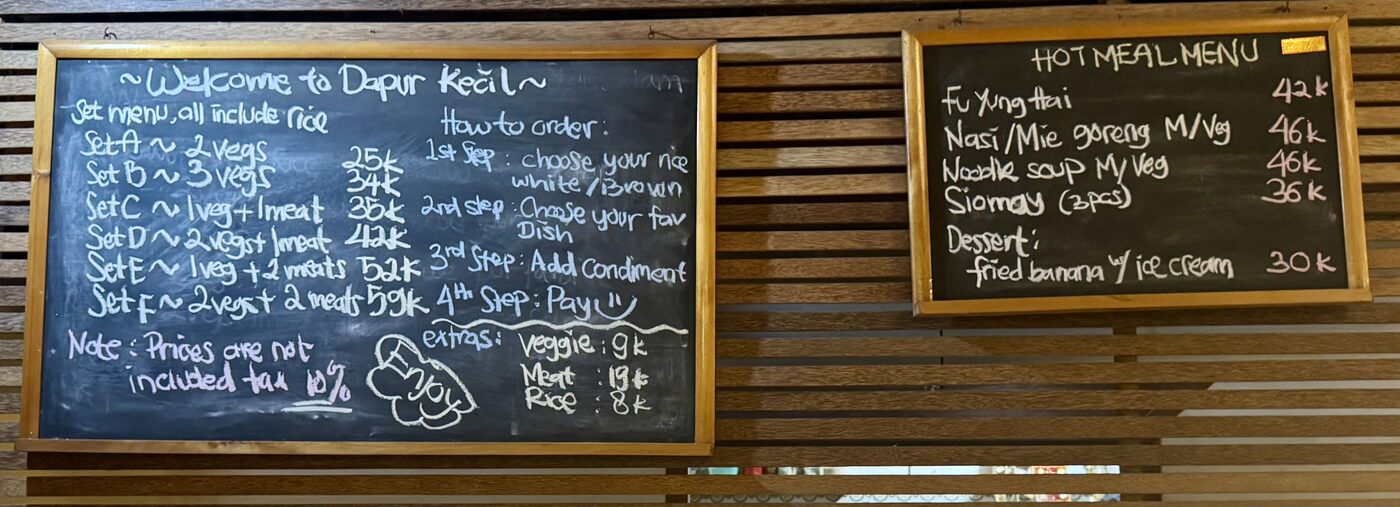
Street meals run $1 to $3 each. Sit-down local restaurants land at $4 to $8 for a main. A proper dinner for two with drinks at a good local restaurant rarely exceeds $15 to $20.
Eat breakfast and lunch at street stalls and markets. Save the sit-down meal for dinner. Ask your guesthouse host where they actually eat. It’s the fastest shortcut to the real food and they’re always happy to tell you.
One thing blows food budgets without you noticing: alcohol. It’s cheap enough that it’s easy to underestimate. A few happy-hour cocktails a night adds up faster than three meals. Drink local beer (Singha, Chang, Bia Hà Nội, BeerLao) at $1 to $2 a bottle and you’re fine.
Getting around between countries
Transport is where Southeast Asia budgets either hold or leak. The decision almost always comes down to speed versus cost, and the faster you move, the more you spend.
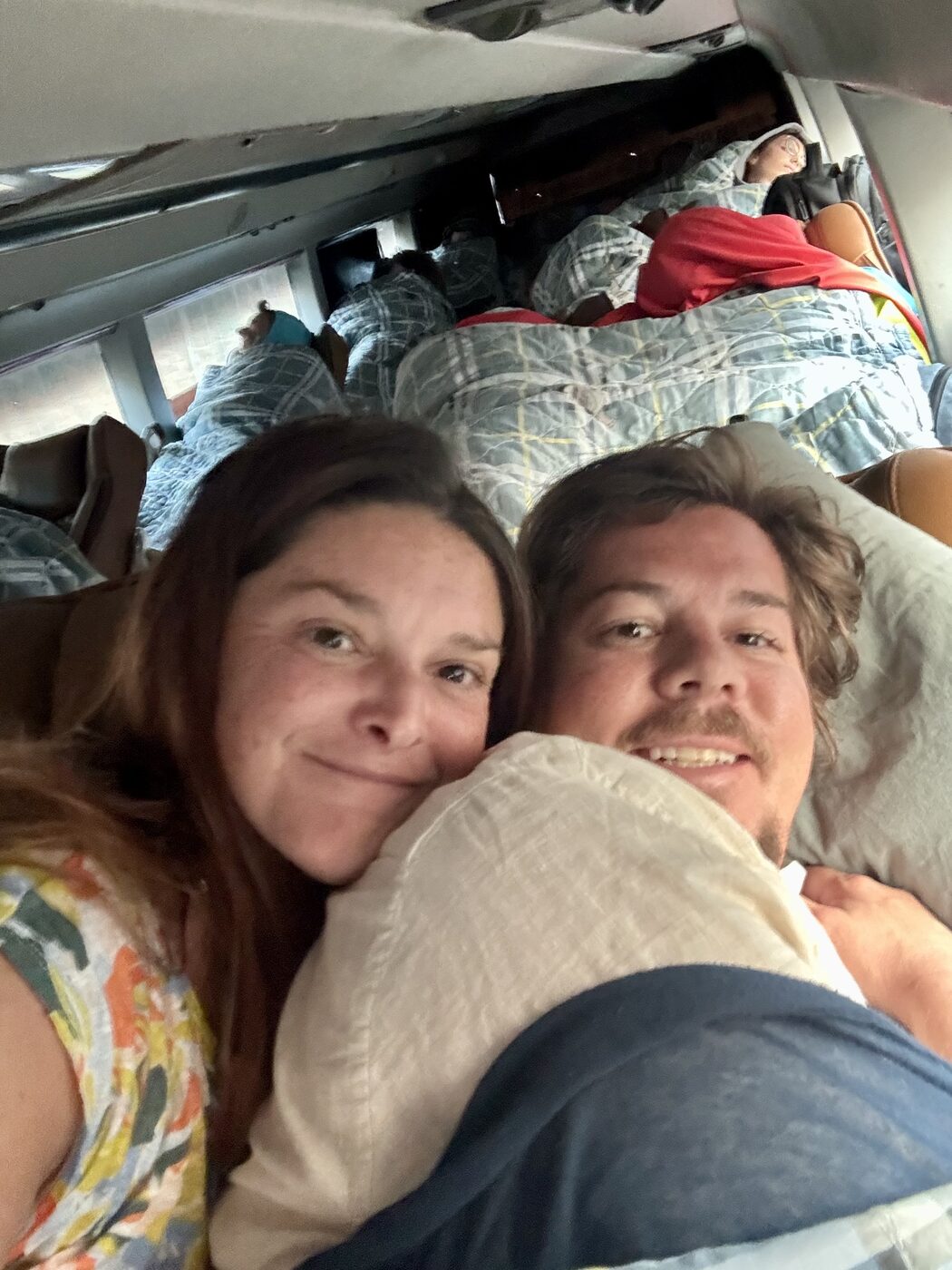
Overnight buses and trains cost less and save a night of accommodation simultaneously. In many cases, the journey itself becomes part of the experience. The 27-hour bus from Laos into Vietnam is not comfortable. We won’t pretend otherwise. We’d do it again.
Within cities, Grab is inexpensive, metered, and scam-proof: you see the price before you confirm. Scooter rentals run $5 to $8 per day and unlock a level of freedom that changes how you experience a place entirely. Wear a helmet, ride carefully, and make sure your travel insurance covers it.
Between cities, night buses run $10 to $25 for most major routes. Vietnam’s sleeper trains are comfortable and scenic, one of the better travel experiences in the region. For budget flights between countries, AirAsia and VietJet run surprisingly cheap fares when booked in advance. For overland crossings, 12Go Asia makes multi-country routing straightforward to research.
What to skip
Seven months gave us a clear picture of what’s worth spending on and what isn’t.
Organized tours of things you can do yourself (temples, markets, walking streets) almost never add value. Most of what makes Southeast Asia extraordinary is free or nearly free, and a tour company between you and it usually takes something away rather than adding to it.
If you do want a guide, skip the company and find a local. This is much easier than it sounds. We got offers all over the region from people who wanted to show us around their own town and talk about their own culture, and we’d take that over a scheduled itinerary everyone else is also on, every single time. The money goes to the person actually doing the work, and you end up somewhere the tour bus doesn’t stop.
Overpriced rooftop bars near landmark areas are a reliable way to spend $15 on a cocktail for a view you could enjoy for $2 in local beer from a riverside guesthouse. We fell for this exactly once.
Moving too fast is probably the biggest budget leak of all, and the least obvious one. Every city change costs in transport, in orientation time, in the price premium of first-night booking. Staying longer in fewer places cuts costs and deepens the experience simultaneously. We learned this in the van and it held true across every country we traveled in Asia.
The longer you stay, the better the math gets
The longer you travel in Southeast Asia, the more you benefit from the initial investment to get there. Flights are the fixed cost. Once you’re on the ground, the daily cost is low enough that extending the trip by two weeks costs less than the flight home and back again.
Seven months felt like a long time before we went. On the ground, it felt like barely enough. The region is that good, and that affordable.
$70 a day won’t feel like a budget once you get there. It’ll feel like more than enough.